We are the method: Using feminist photovoice for deeper, more responsible impact
By Mark Reed and Louisa Gilchrist · 5 Dec 2025 · 3 min read
By Mark Reed and Louisa Gilchrist
Photovoice is more than photos plus interviews. Used well, it becomes a way of doing research that gives people control over how their experiences are seen and used. This blog adapts Heriot-Watt researcher Louisa Gilchrist’s study with East and Southeast Asian women in Scottish cities, published this month in the journal Sentio, for any researcher who wants to create more inclusive and empowering engagement that leads to better, more responsible impact.
What photovoice looks like in practice
Participants take pictures that say something about their lives and the places they move through. They add short stories or captions, then meet to discuss what the images mean for them and for change. In this project, the camera became a way to trace encounters, discomforts and recognition across the city, rather than a tool to document static facts. It also captured the atmospheres and small moments (feeling watched, feeling out of place, or feeling unexpectedly supported) that shape how people move through the city.
- “It’s strange to see our culture celebrated on posters, but in real life, people barely see us.” A participant photographed a Fringe Festival advert and used it to question visibility on the street versus visibility on a poster.
- “It’s so important having someone kind of beside me who recognises how I feel without constant questions, or that I’m overreacting… they understand being berated by men at midnight or racial slurs being shouted at me isn’t harmless banter.” A participant photographed a Strut Safe sticker that signals informal care in public space.
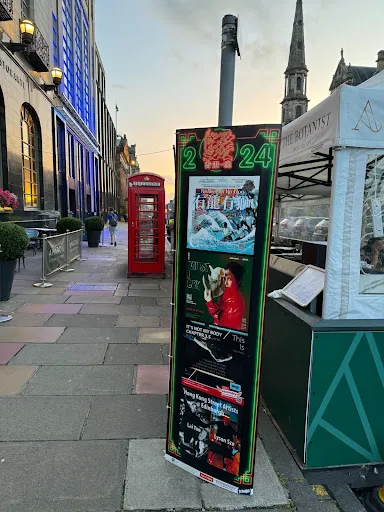
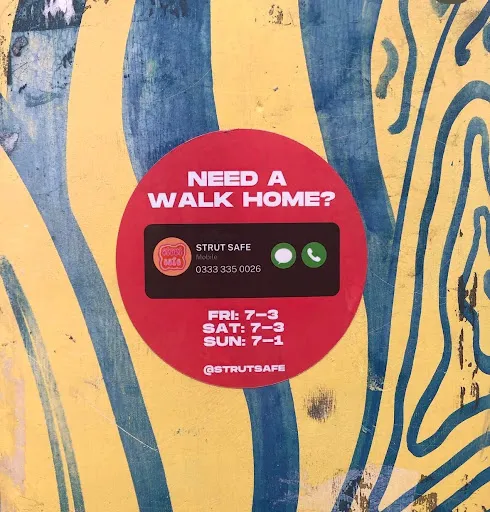
These images do not aim to prove a point. They invite a response and make room for nuance, resisting tidy stories about risk or recognition.
Why this matters for impact
Impact here is not a single event or a media headline. It is what lasts: how images and conversations quietly change what people notice, how they move, and what they talk about later. Participants reported returning to familiar routes differently. Images resurfaced in later reflections. Impact becomes a steady presence that often sits outside formal metrics.
Principles that make photovoice empowering:
- Co-authorship. Participants decide what to show, how to tell it and how it is shared. Images are not illustrations for a researcher’s story. They generate meaning in their own right.
- Refusal and ambiguity. Not every experience should be made visible. Choosing not to photograph or to blur an image can be as meaningful as taking a clear shot.
- Situated knowledge. Who we are shapes what we can know. Researchers are part of the picture, not outside it. This calls for humility and ongoing reflection.
- Care and consent. Ethics approval and informed consent are the floor, not the ceiling. Go further by protecting anonymity and letting people control how their images and words travel.
A step-by-step way to run it
1) Frame the purpose. Explain that the goal is to surface lived experience and possibilities for change, not to extract evidence for a report. Set expectations about pace and care.
2) Recruit and brief participants. Invite people who are directly affected by the issue. Provide a simple guide on safe photography, privacy and consent. Emphasise that not taking a photo is always an option.
3) Image-making period. Give time for everyday noticing. Encourage captions or voice notes that explain why each image matters to the person who took it. Treat images as prompts, not proof.
4) Dialogues around images. Hold small group sessions to discuss meanings and possible actions. Let participants lead. The researcher listens and supports. Avoid pushing for closure.
5) Co-decide outputs. Agree together how, where and whether to share images and stories. Options include private reflection, community showings, or policy conversations. Keep agency with participants throughout.
6) Support afterlives. Plan for follow-up check-ins. Expect insights to return over time rather than all at once. Track these quieter shifts alongside any direct policy or practice changes.
What “we are the method” means for practice
Method is not a neutral tool outside of relationships. Who is involved, how care is shown, and what is made visible all shape what can be known. Photovoice treats participants as co-authors and accepts ambiguity where visibility could harm or oversimplify. This stance is practical. It produces better explanations for complex issues because people define what matters on their own terms. It builds trust and care because control stays with participants. It also reframes impact as a set of durable shifts in awareness and everyday practice that continue after a project ends, whether or not these shifts fit standard metrics. For researchers under pressure to produce fast, countable outcomes, the lesson is clear: slower, relational work can create effects that last. Use photovoice to open shared ways of seeing that support change, and keep decisions about representation and sharing with the people whose lives are pictured.
For further information about this research or related work, connect with Prof. Mark Reed and Louisa Gilchrist on LinkedIn.
Stay up to date
Keep up with new resources, free training and recent thinking on research impact.